A story, a question,
a response
Each book starts with a named Bible passage. Children come to understand the account, examine what it means and consider a fitting response. The three collections do this in different ways, matched to the age and independence of the child.
One purpose, three ways in
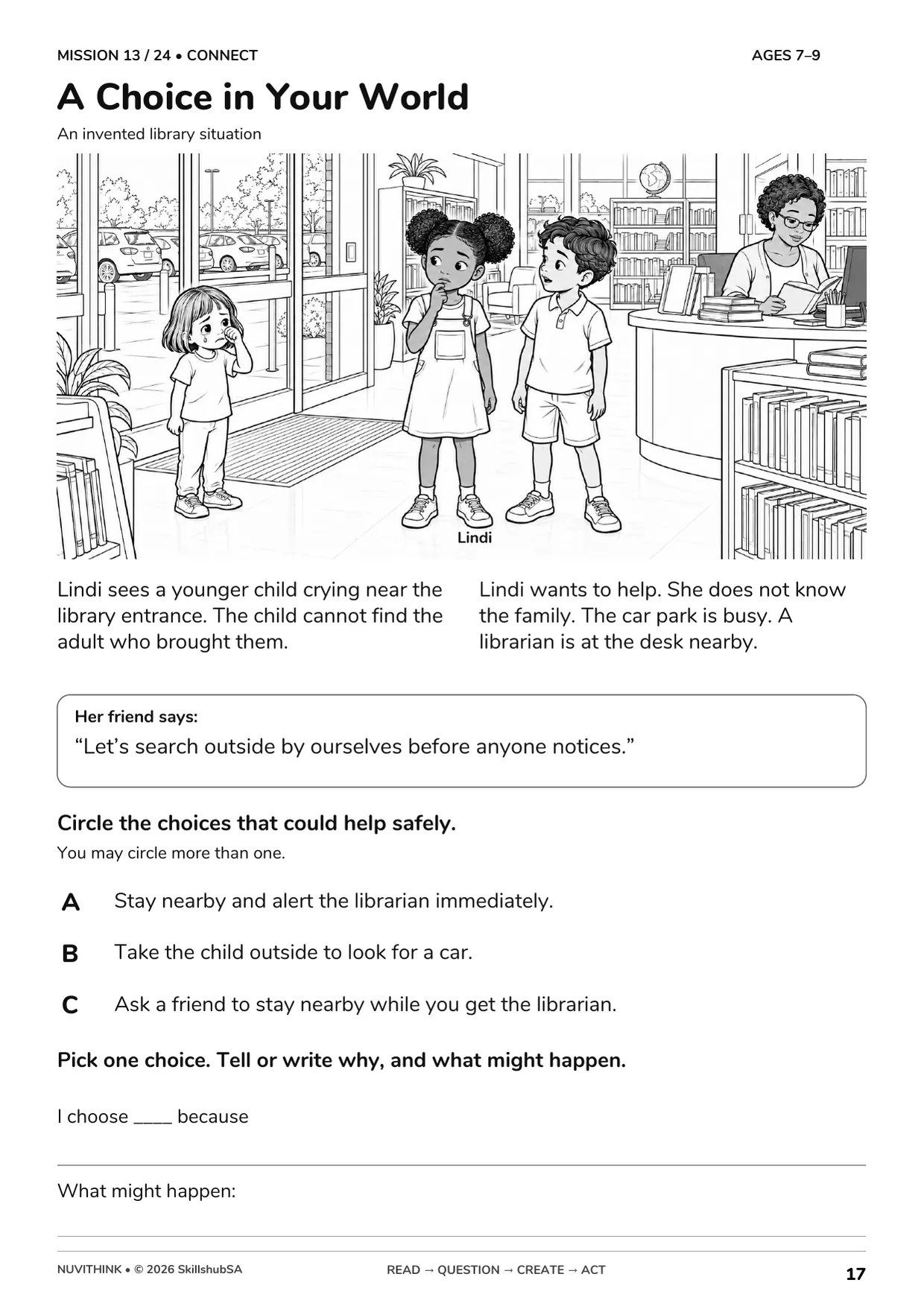
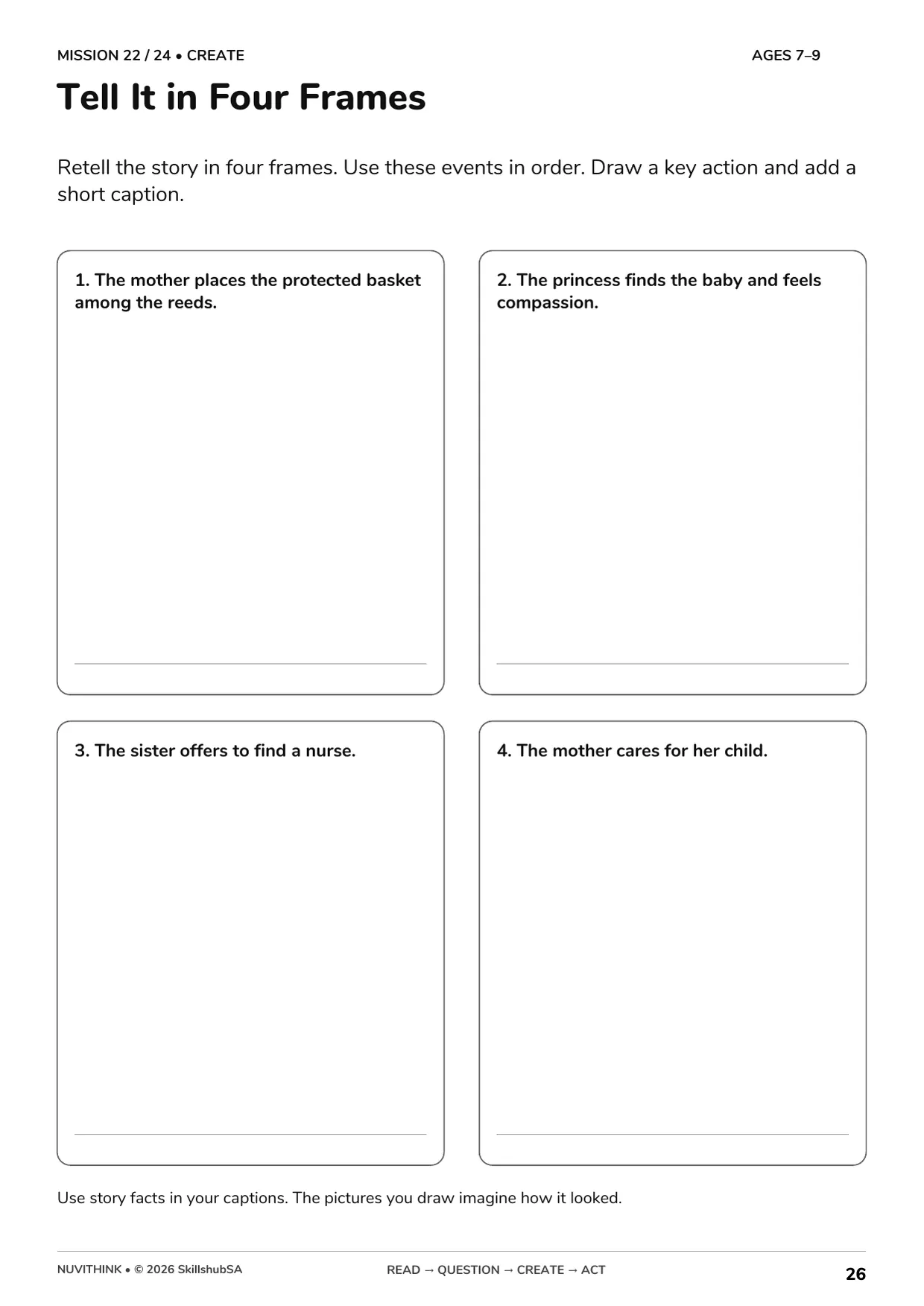
Choose an age group to see its four steps, real pages from one of its books and an example of how a Bible account becomes an everyday step of faith.
Reading together with a grown-up
This collection is made for shared reading. A grown-up reads the story and instructions aloud, welcomes the child’s response and helps connect the activity to a small action.
Listen
A grown-up reads the Bible account or teaching aloud in simple language; the books contain no audio. The adult can also read the named passage from the Bible, explain unfamiliar words and help the child notice the people and events.
Think
Children consider what happened, notice details and talk about a choice. A gentle follow-up question and time to answer matter more than a quick reply.
Colour
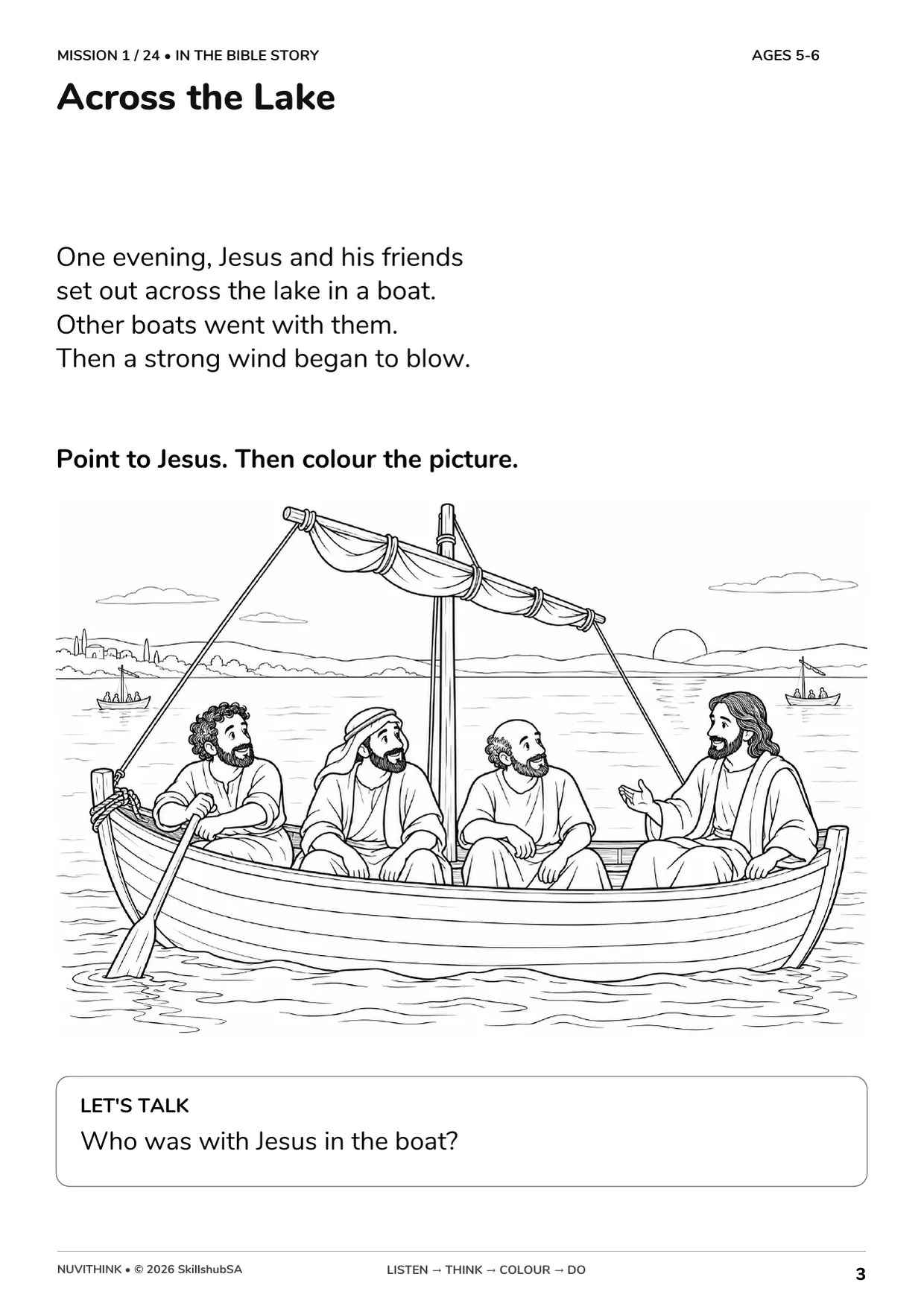
Children look closely at the illustration and colour part of the page. Colouring gives time to stay with the scene and talk about it.
Do
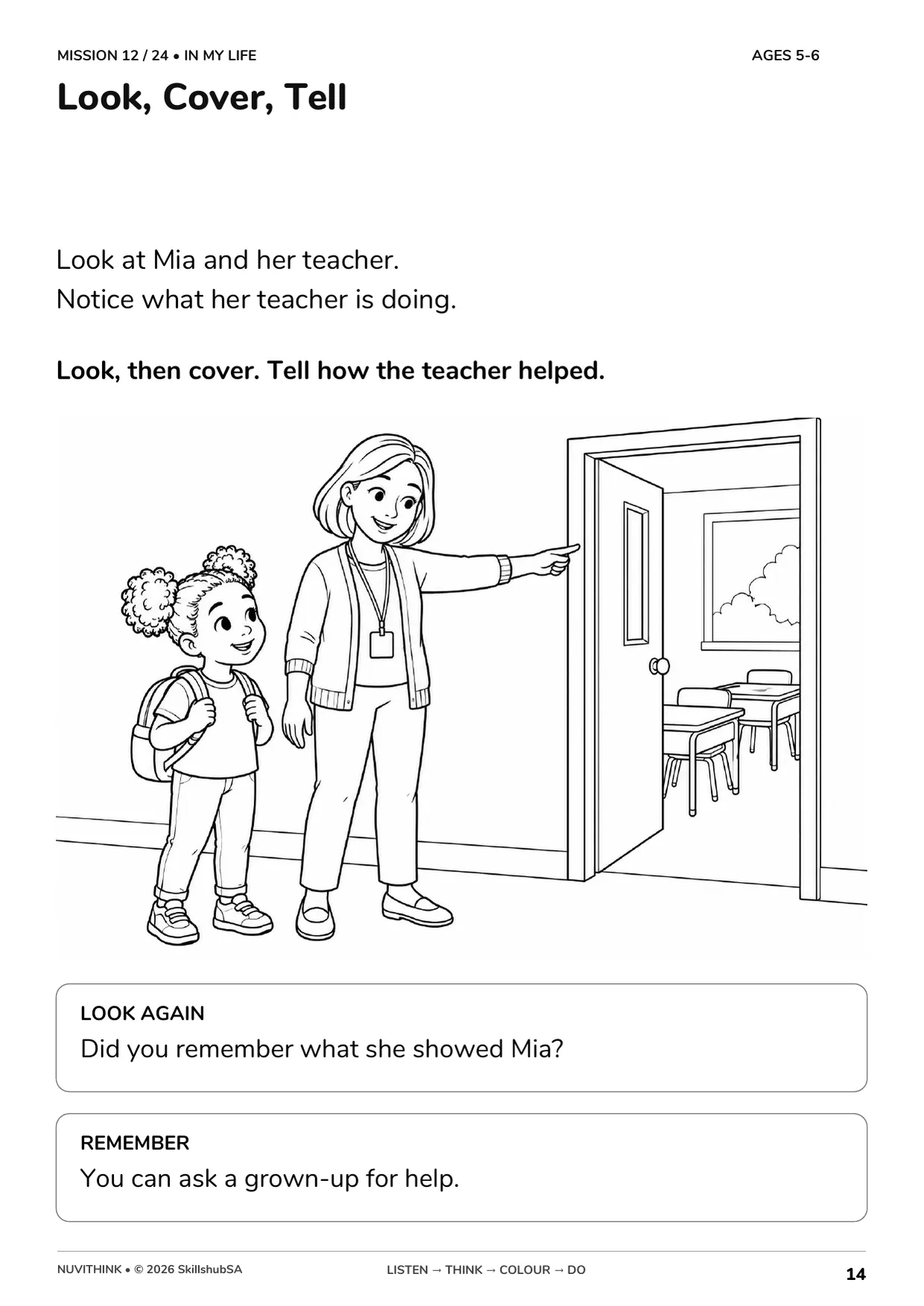
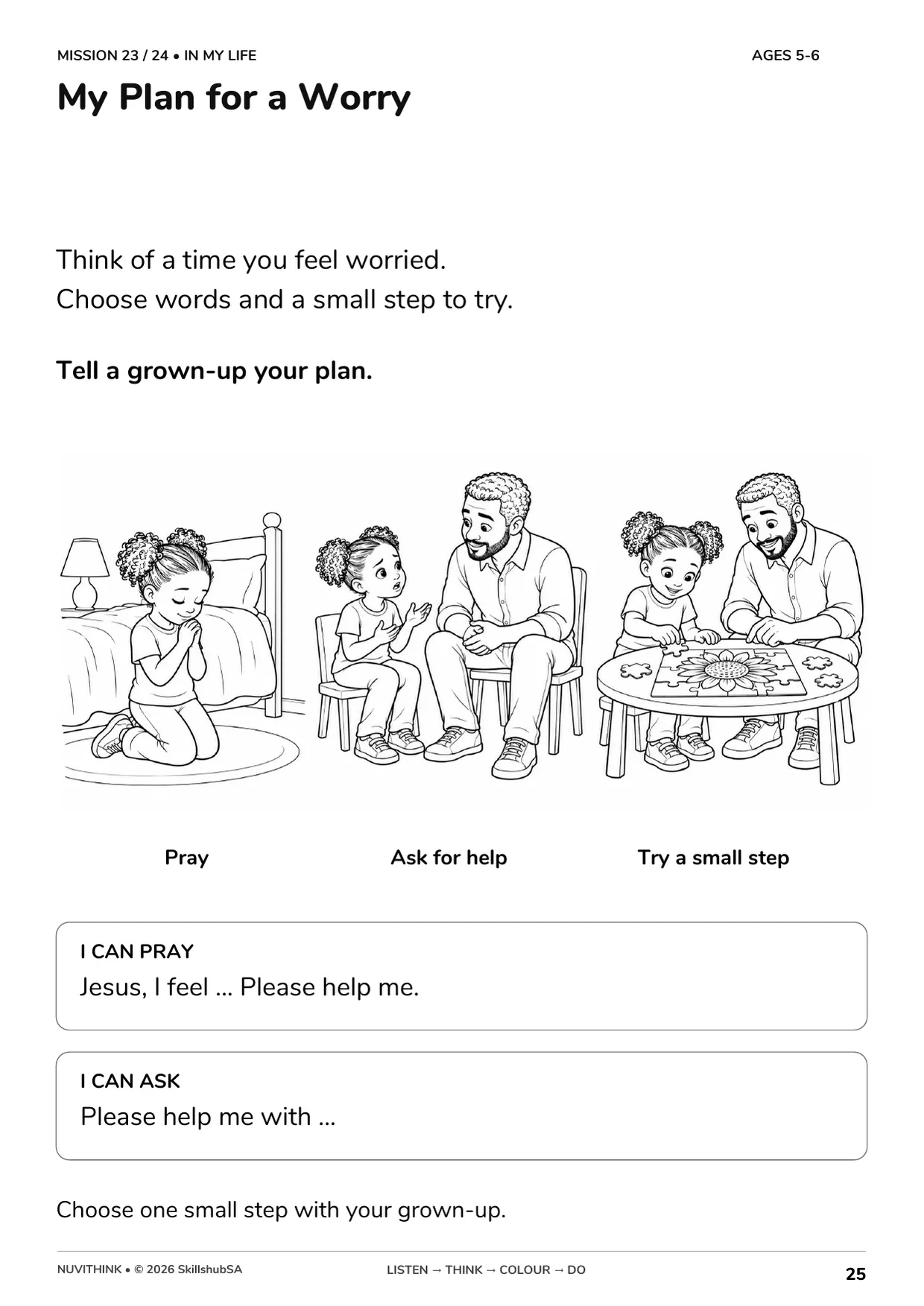
Children try one small, appropriate action with help, such as asking a teacher for directions, choosing kind words, saying thank you or praying together.
Reading, investigating and responding
Each book has six story readings and eighteen investigations or activities. There is more room for explanation, reflection, dialogue and reasoning. Children can read on their own or with support, and adult discussion remains valuable.
Read
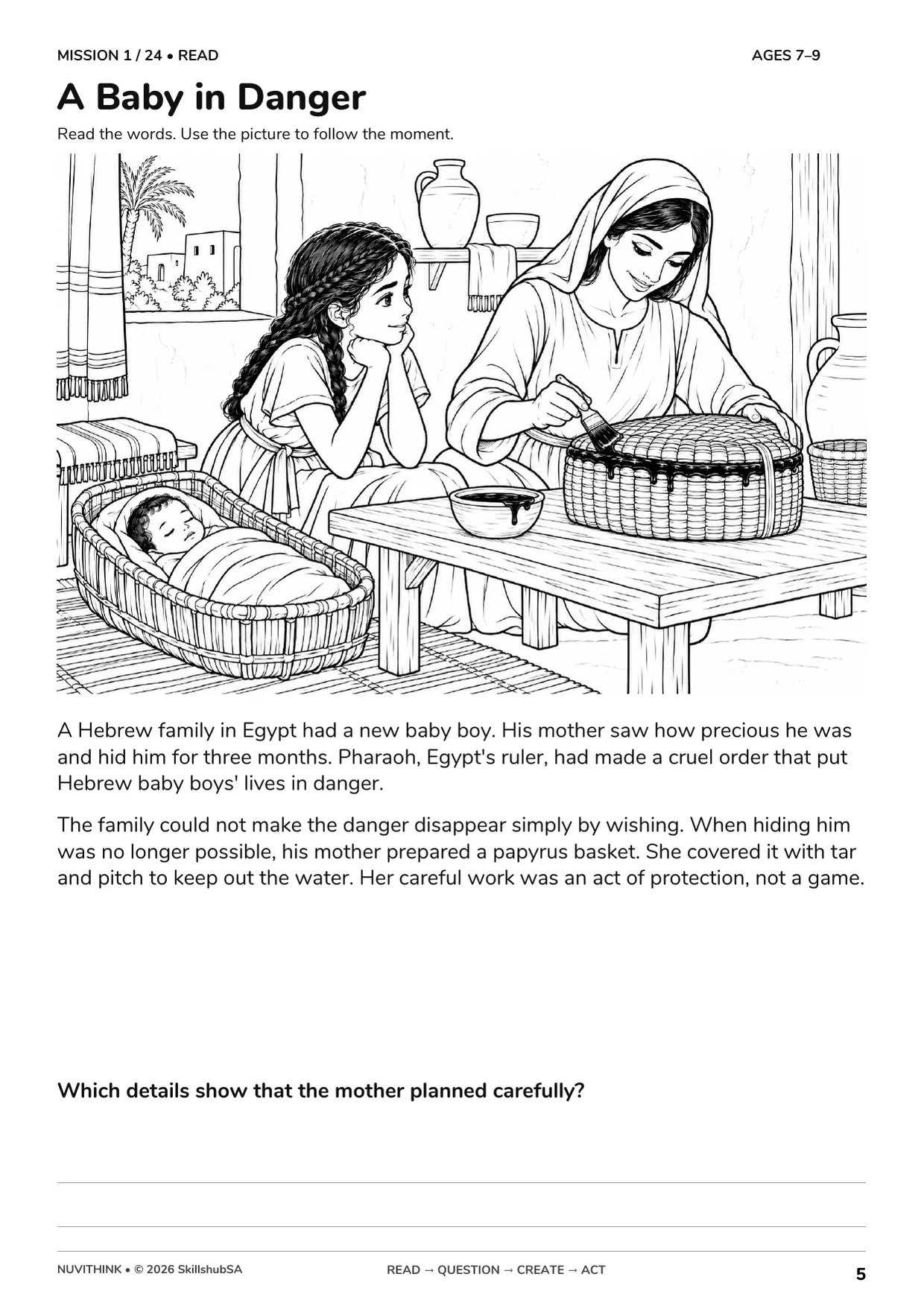
Children read a short section on their own or with an adult or partner, pausing over new words. Six readings divide the Bible account into manageable parts.
Question
Children look for support for their answers: comparing events, asking about motives, tracing causes and consequences, and telling a stated fact from a reasonable guess.
Create
Children make their thinking visible through discussion, drawing, writing, sequencing, dialogue or supported role-play. Answers can be spoken or dictated.
Act
Children connect an idea from the story to an everyday situation and plan a small, safe step: what they could notice, say or do, and who could help.
Independent reasoning about faith and life
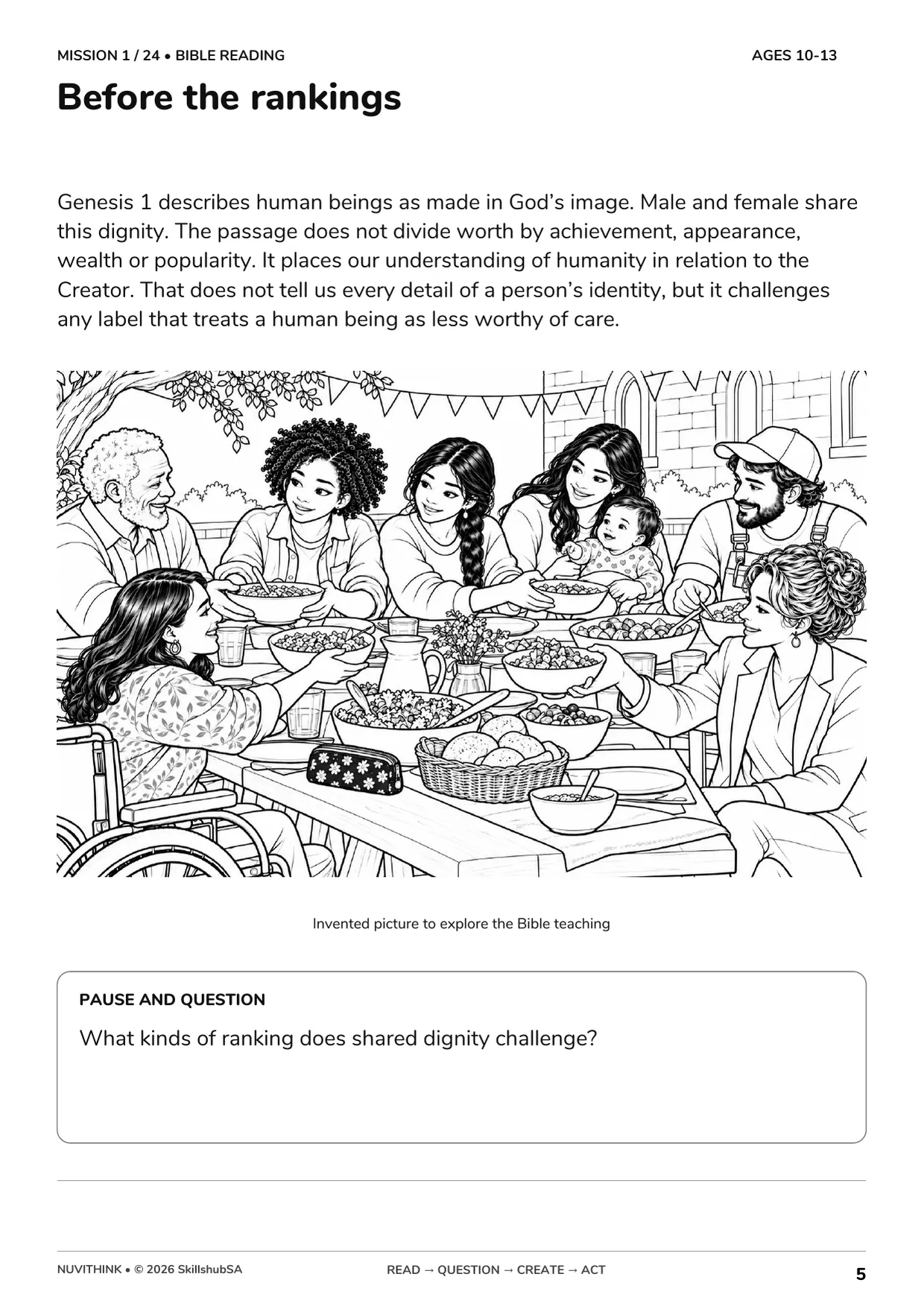
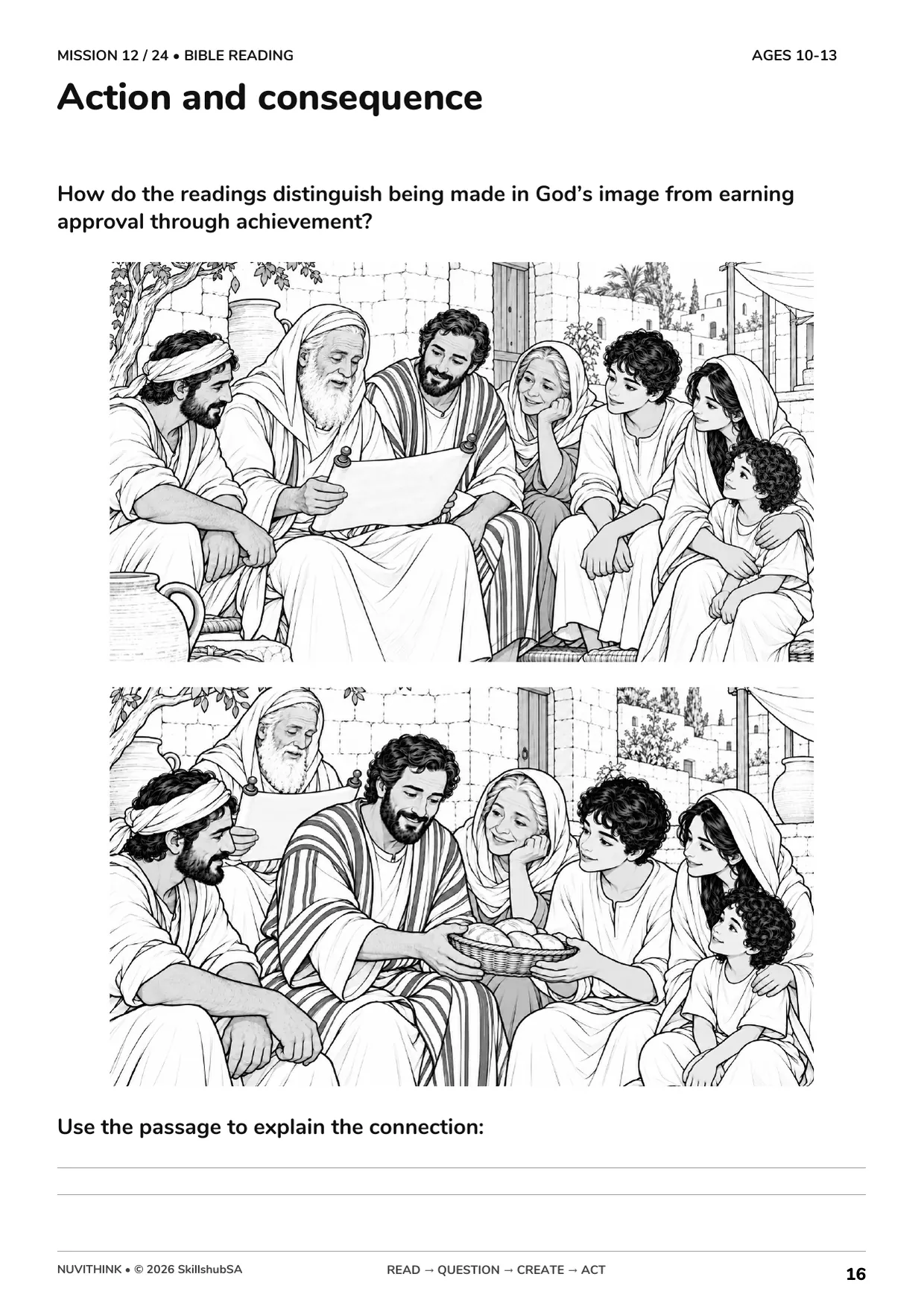
The newest collection is written for older children and young teens, with the same routine as ages 7–9 but more room for independent reasoning: testing claims against the passage, weighing two views and tracing what follows from a choice.
Read
Young people read a Bible passage and a short explanation of its context, on their own or with others. Six readings open up what the passage says and how it fits its setting.
Question
They test claims against the passage, separate what it states from what is inferred or imagined, weigh two views and trace causes and consequences before deciding what they think.
Create
They make their reasoning visible through a journal entry, dialogue, four-frame story, design or written response. Spoken and dictated answers are equally welcome.
Act
They connect the teaching to a realistic situation at school, online or at home, plan one manageable step, name a responsible adult who can help and review what happened.
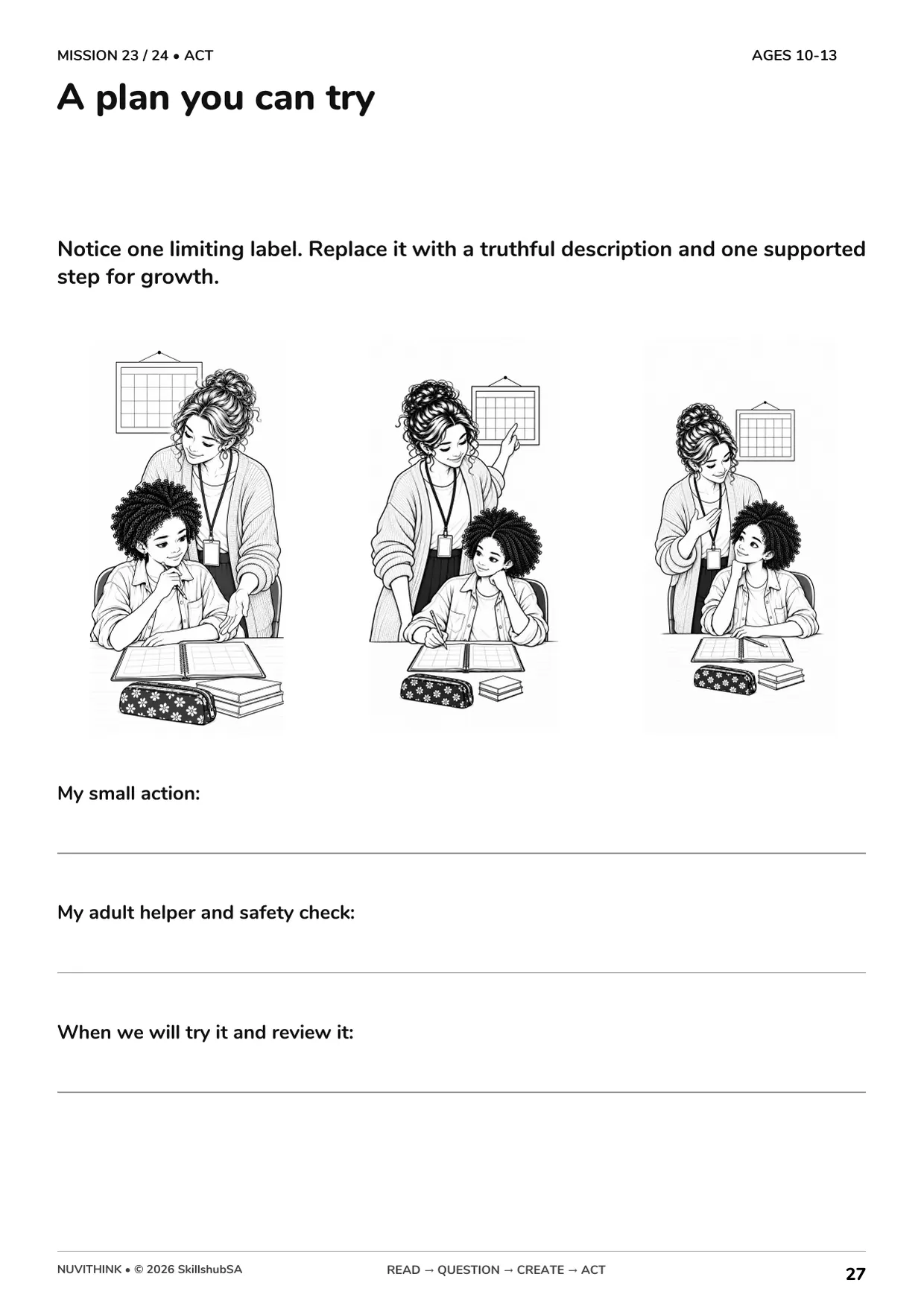
 ColouredIn the book
Pages children make their own
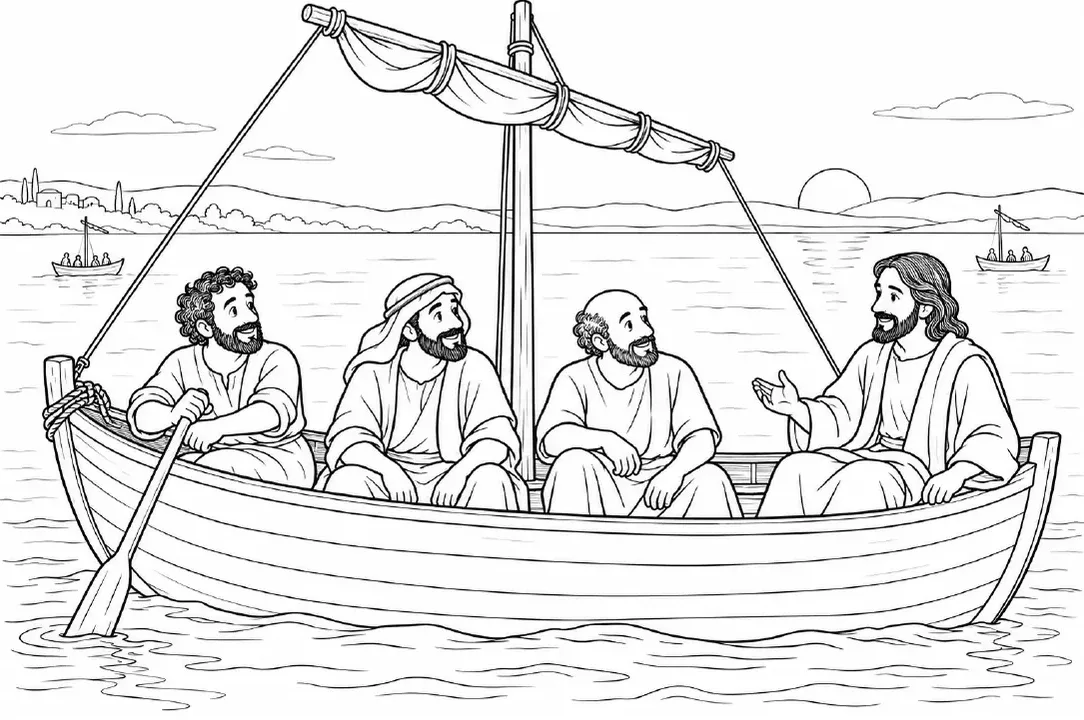
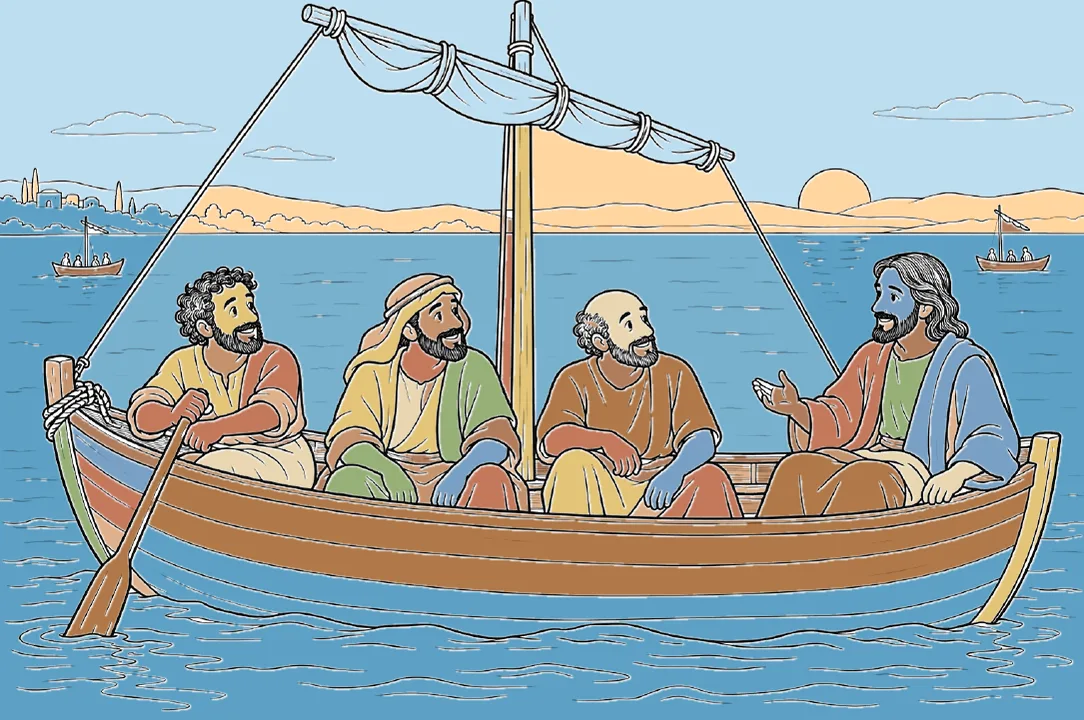
Book pages are printed in black and white so children can add their own colour while they talk about the scene. Colouring gives time to stay with the story. The coloured version here shows what that step can look like.
Thinking in the service of Scripture
Every collection invites children to practise habits of thought that help them understand God’s Word and live it out: paying attention, asking for an explanation, considering consequences and checking a first answer.
These are opportunities to practise. What a child gains depends on the activity, their participation and the support around them. The books do not claim that completing missions produces a general rise in ability or a particular level of spiritual maturity.
What you will find inside
Ready to begin?
Browse the books by age and theme, or ask us which titles suit your family, class or church.