How the books work

A story, a question,
a response

Each book starts with a named Bible passage. Children come to understand the account, examine what it means and consider a fitting response. The three collections do this in different ways, matched to the age and independence of the child.

Step through each routine

One purpose, three ways in

Choose an age group to see its four steps, real pages from one of its books and an example of how a Bible account becomes an everyday step of faith.

AGES 5–6 · 28 PAGES · 24 MISSIONS

Reading together with a grown-up

This collection is made for shared reading. A grown-up reads the story and instructions aloud, welcomes the child’s response and helps connect the activity to a small action.

1

Listen

A grown-up reads the Bible account or teaching aloud in simple language; the books contain no audio. The adult can also read the named passage from the Bible, explain unfamiliar words and help the child notice the people and events.

2

Think

Children consider what happened, notice details and talk about a choice. A gentle follow-up question and time to answer matter more than a quick reply.

3

Colour

Children look closely at the illustration and colour part of the page. Colouring gives time to stay with the scene and talk about it.

4

Do

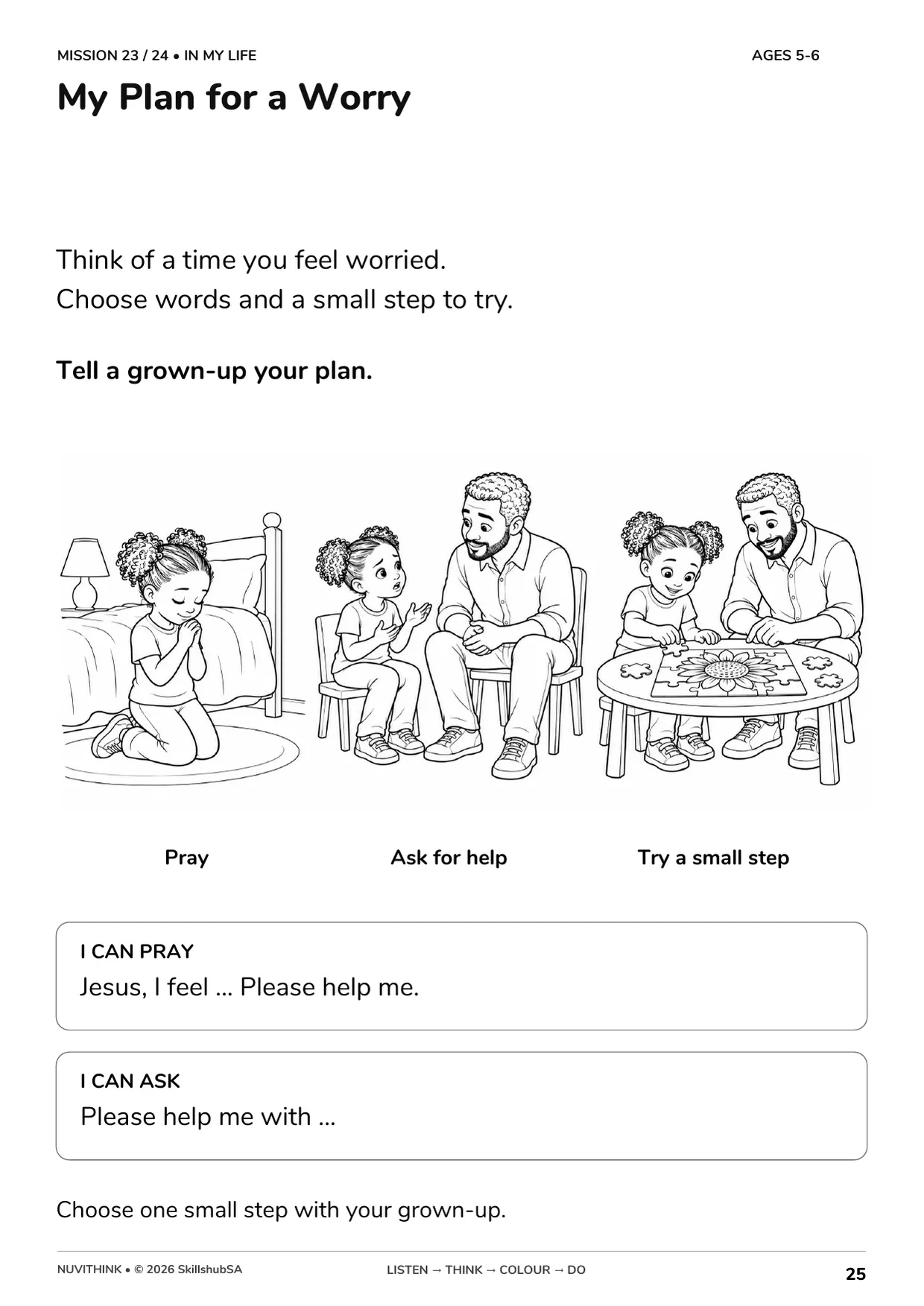
Children try one small, appropriate action with help, such as asking a teacher for directions, choosing kind words, saying thank you or praying together.
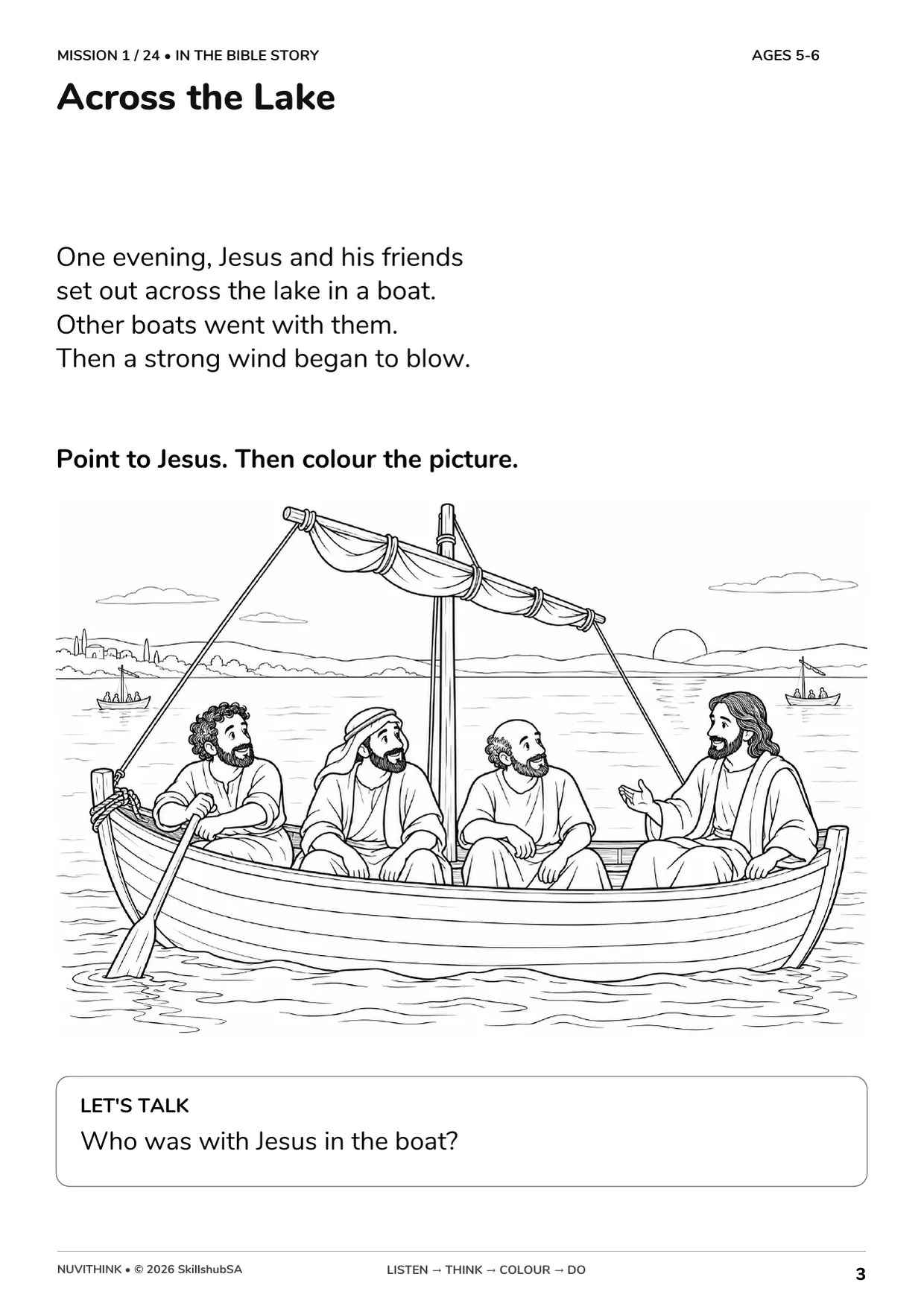
Page 3 of Who Can I Trust?: Across the Lake
Across the LakePage 3 · Mission 1 · In The Bible Story
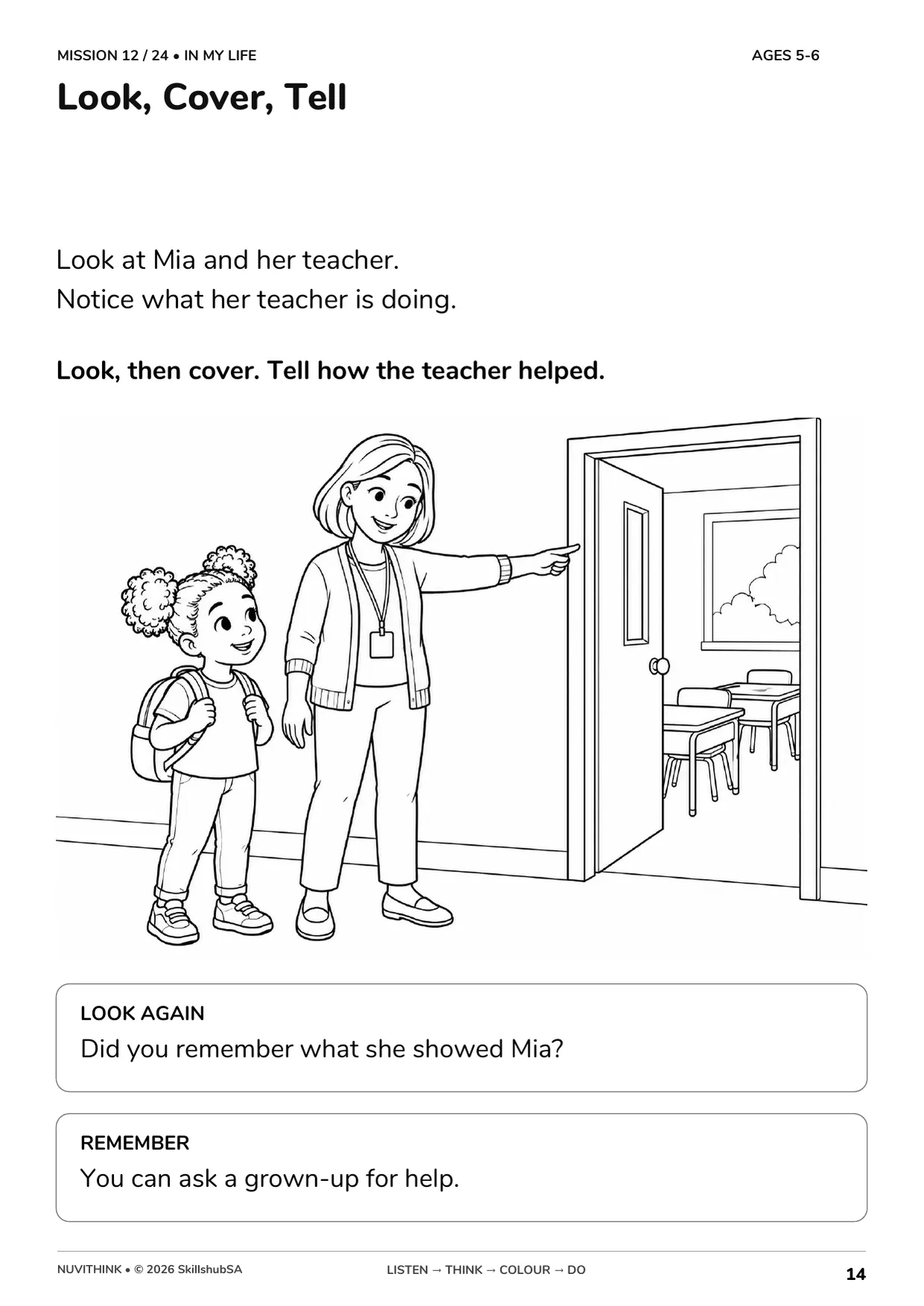
Page 14 of Who Can I Trust?: Look, Cover, Tell
Look, Cover, TellPage 14 · Mission 12 · In My Life
Page 25 of Who Can I Trust?: My Plan for a Worry
My Plan for a WorryPage 25 · Mission 23 · In My Life
Good to knowChildren can take part by speaking, pointing, signing, drawing or simply pausing. Reading fluency and writing speed do not decide whether a child can join in.
An example from Who Can I Trust?In Who Can I Trust?, a modern scene shows Sam unable to find his classroom while his teacher stands near the school door. The child points to the helper and practises asking for directions. This links the book’s conversation about trust and fear with something a young child can do, while keeping the Bible account and the imagined everyday example clearly apart.
AGES 7–9 · 32 PAGES · 24 MISSIONS

Reading, investigating and responding

Each book has six story readings and eighteen investigations or activities. There is more room for explanation, reflection, dialogue and reasoning. Children can read on their own or with support, and adult discussion remains valuable.

1

Read

Children read a short section on their own or with an adult or partner, pausing over new words. Six readings divide the Bible account into manageable parts.

2

Question

Children look for support for their answers: comparing events, asking about motives, tracing causes and consequences, and telling a stated fact from a reasonable guess.

3

Create

Children make their thinking visible through discussion, drawing, writing, sequencing, dialogue or supported role-play. Answers can be spoken or dictated.

4

Act

Children connect an idea from the story to an everyday situation and plan a small, safe step: what they could notice, say or do, and who could help.
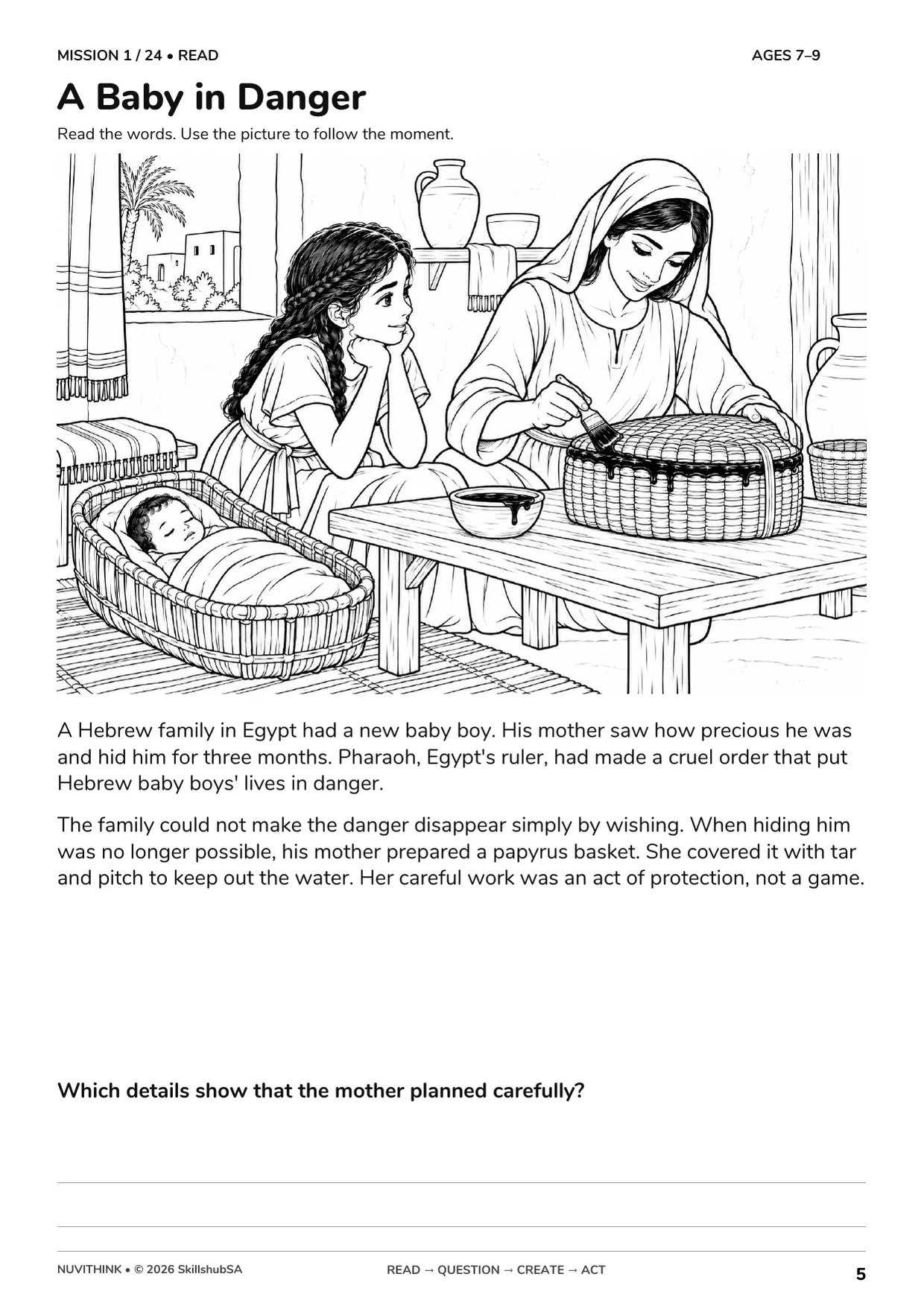
Page 5 of The Basket on the River: A Baby in Danger
A Baby in DangerPage 5 · Mission 1 · Read
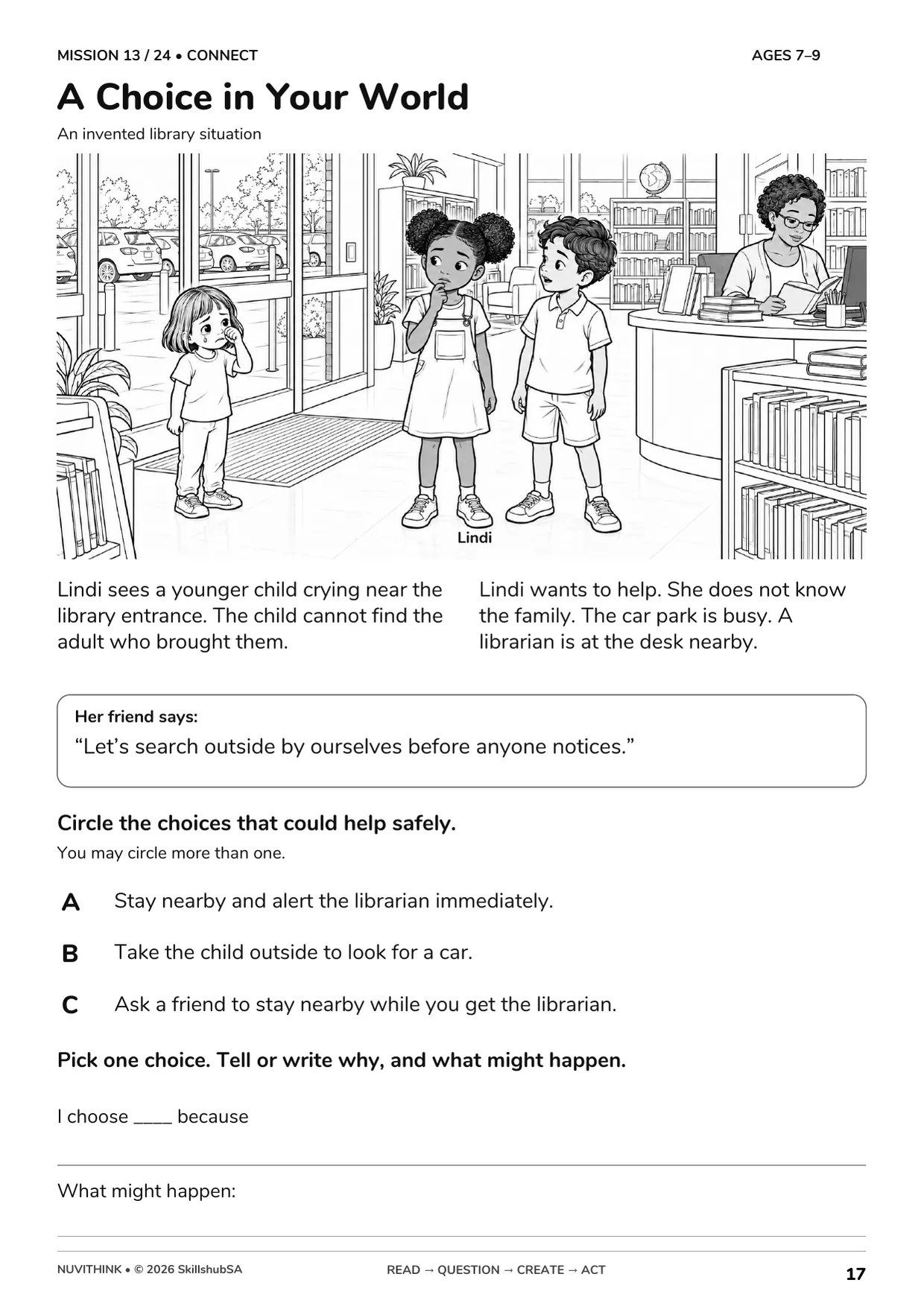
Page 17 of The Basket on the River: A Choice in Your World
A Choice in Your WorldPage 17 · Mission 13 · Connect
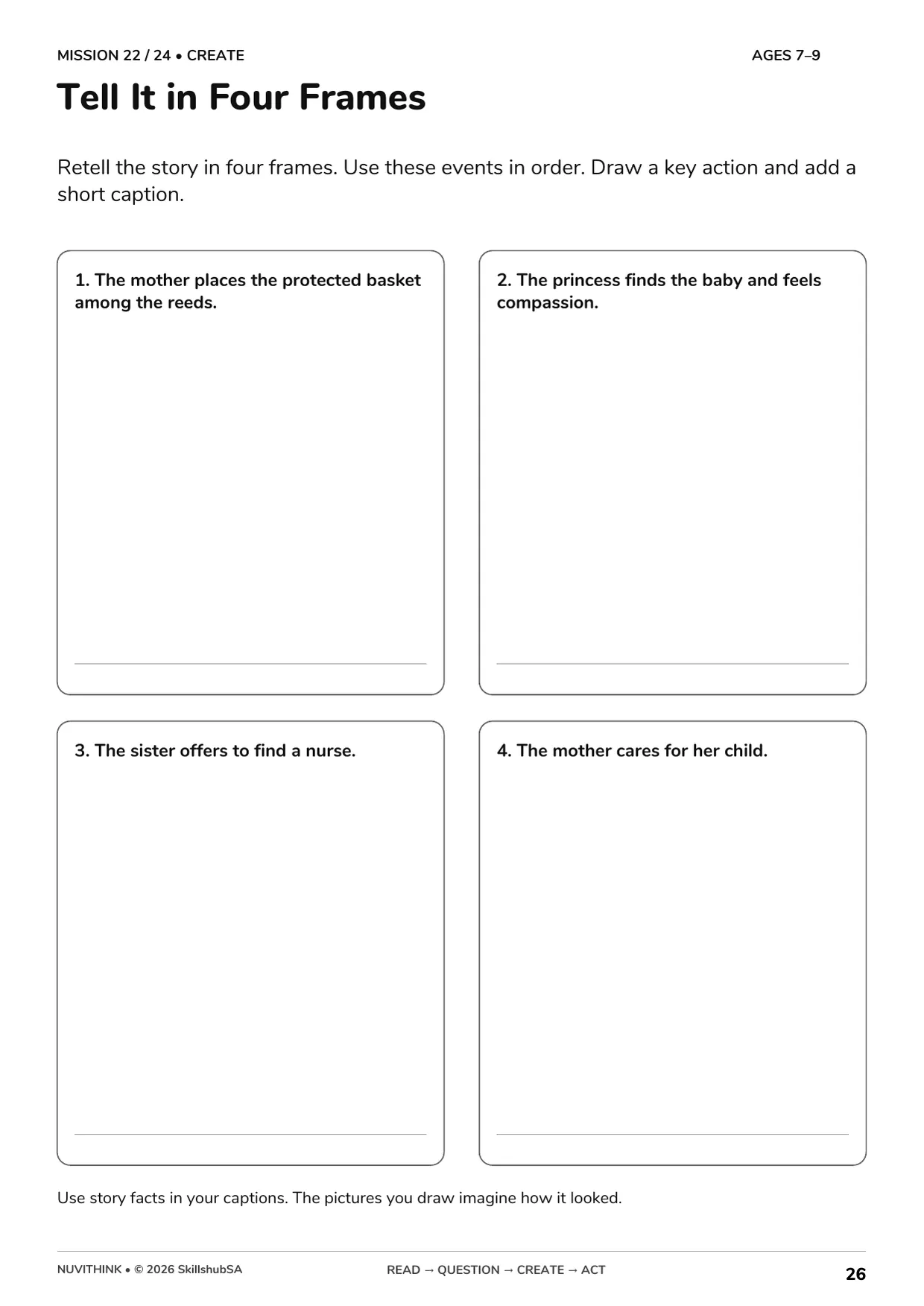
Page 26 of The Basket on the River: Tell It in Four Frames
Tell It in Four FramesPage 26 · Mission 22 · Create
Good to knowAn illustration can help a child imagine a setting, but it does not prove an unstated detail about the Bible account. Keeping the source account, the retelling and imagined details distinct is part of reading thoughtfully.
An example from The Basket on the RiverThe Basket on the River follows the baby Moses over six readings: his mother’s careful protection, his sister keeping watch, and Pharaoh’s daughter choosing compassion at the water. Investigations separate what the account says from what the pictures imagine, and the everyday mission asks how to get a responsible adult’s help quickly when a younger child is lost.
AGES 10–13 · 32 PAGES · 24 MISSIONS

Independent reasoning about faith and life

The newest collection is written for older children and young teens, with the same routine as ages 7–9 but more room for independent reasoning: testing claims against the passage, weighing two views and tracing what follows from a choice.

1

Read

Young people read a Bible passage and a short explanation of its context, on their own or with others. Six readings open up what the passage says and how it fits its setting.

2

Question

They test claims against the passage, separate what it states from what is inferred or imagined, weigh two views and trace causes and consequences before deciding what they think.

3

Create

They make their reasoning visible through a journal entry, dialogue, four-frame story, design or written response. Spoken and dictated answers are equally welcome.

4

Act

They connect the teaching to a realistic situation at school, online or at home, plan one manageable step, name a responsible adult who can help and review what happened.
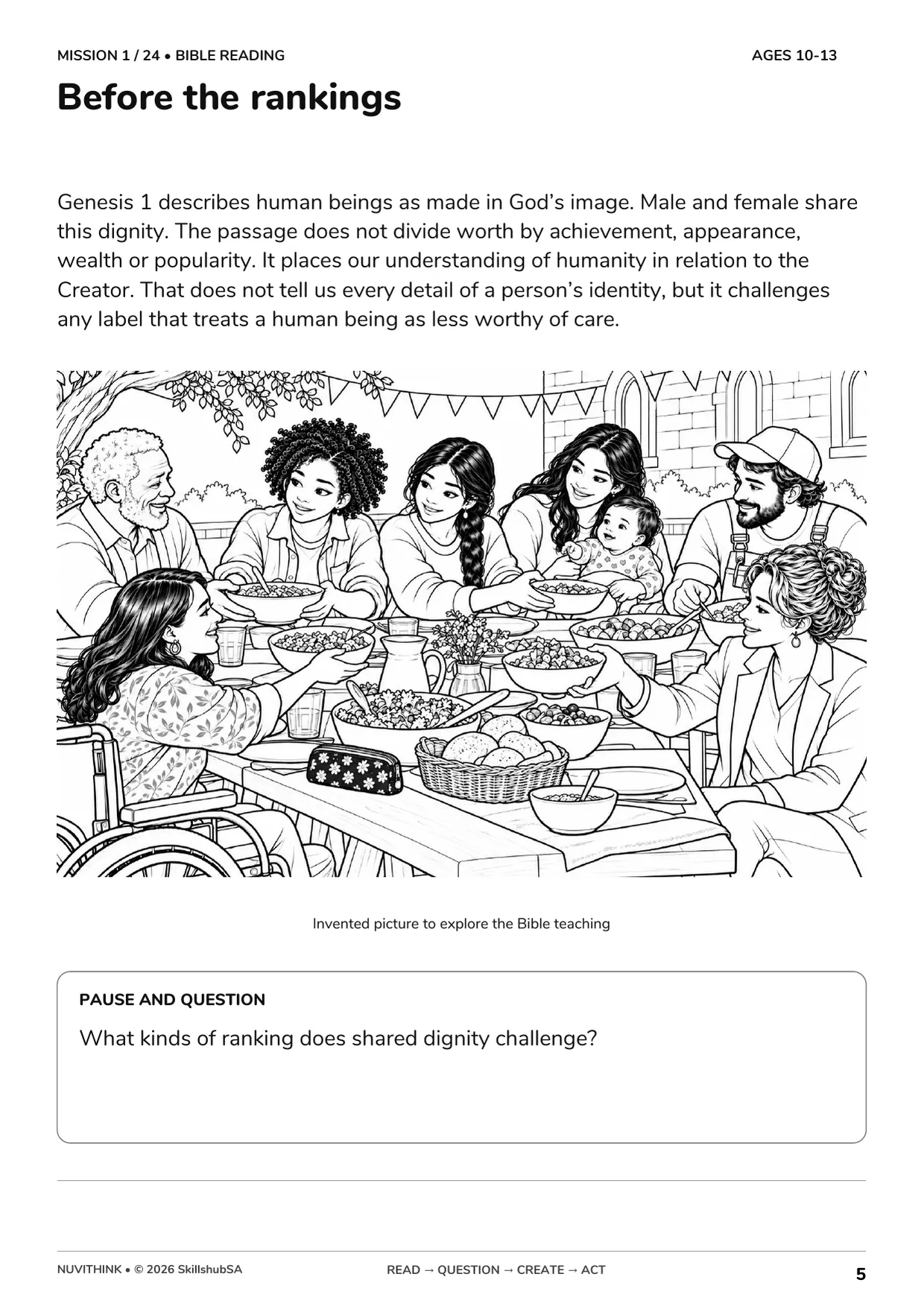
Page 5 of Who Am I Beyond the Labels?: Before the rankings
Before the rankingsPage 5 · Mission 1 · Bible Reading
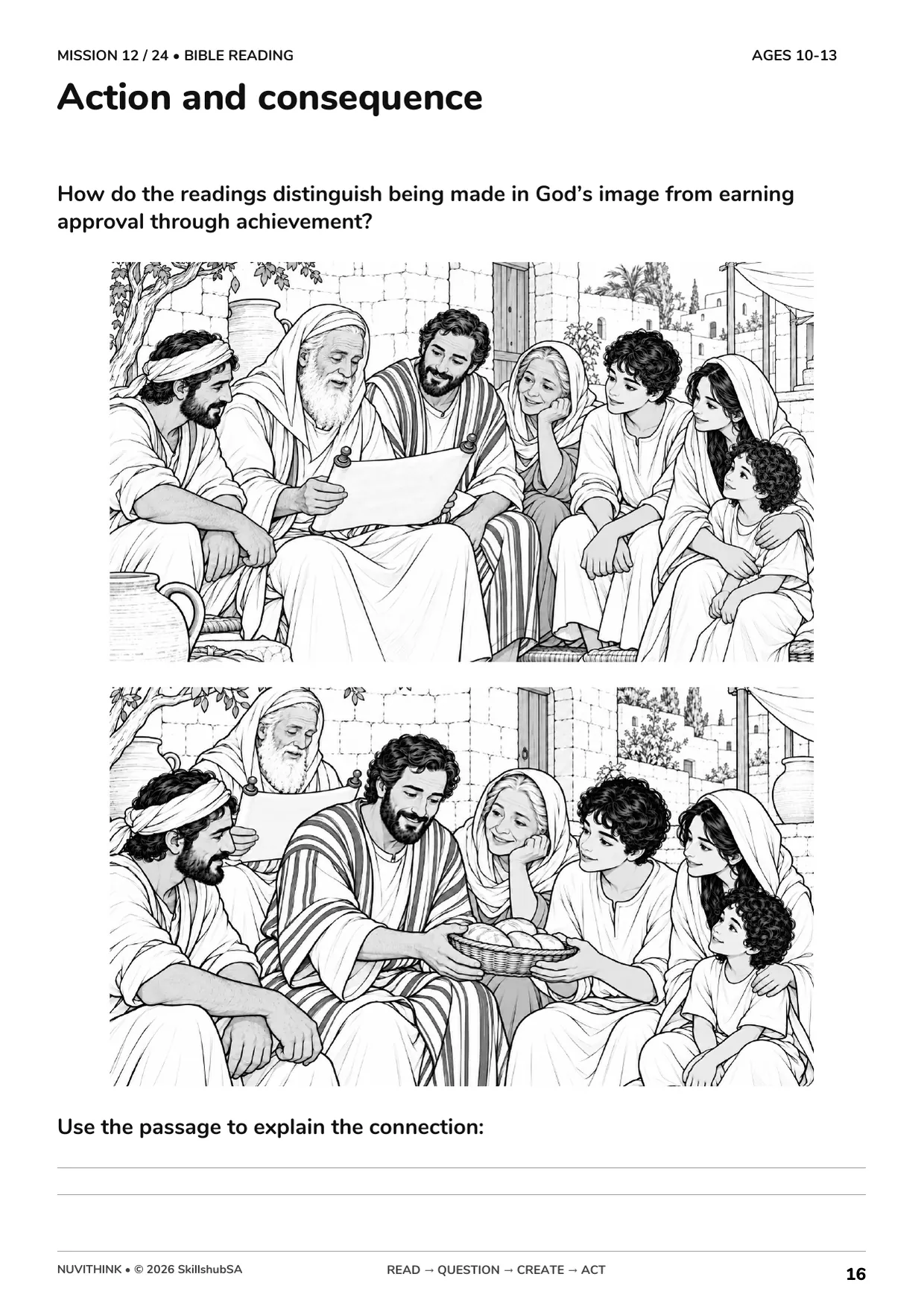
Page 16 of Who Am I Beyond the Labels?: Action and consequence
Action and consequencePage 16 · Mission 12 · Bible Reading
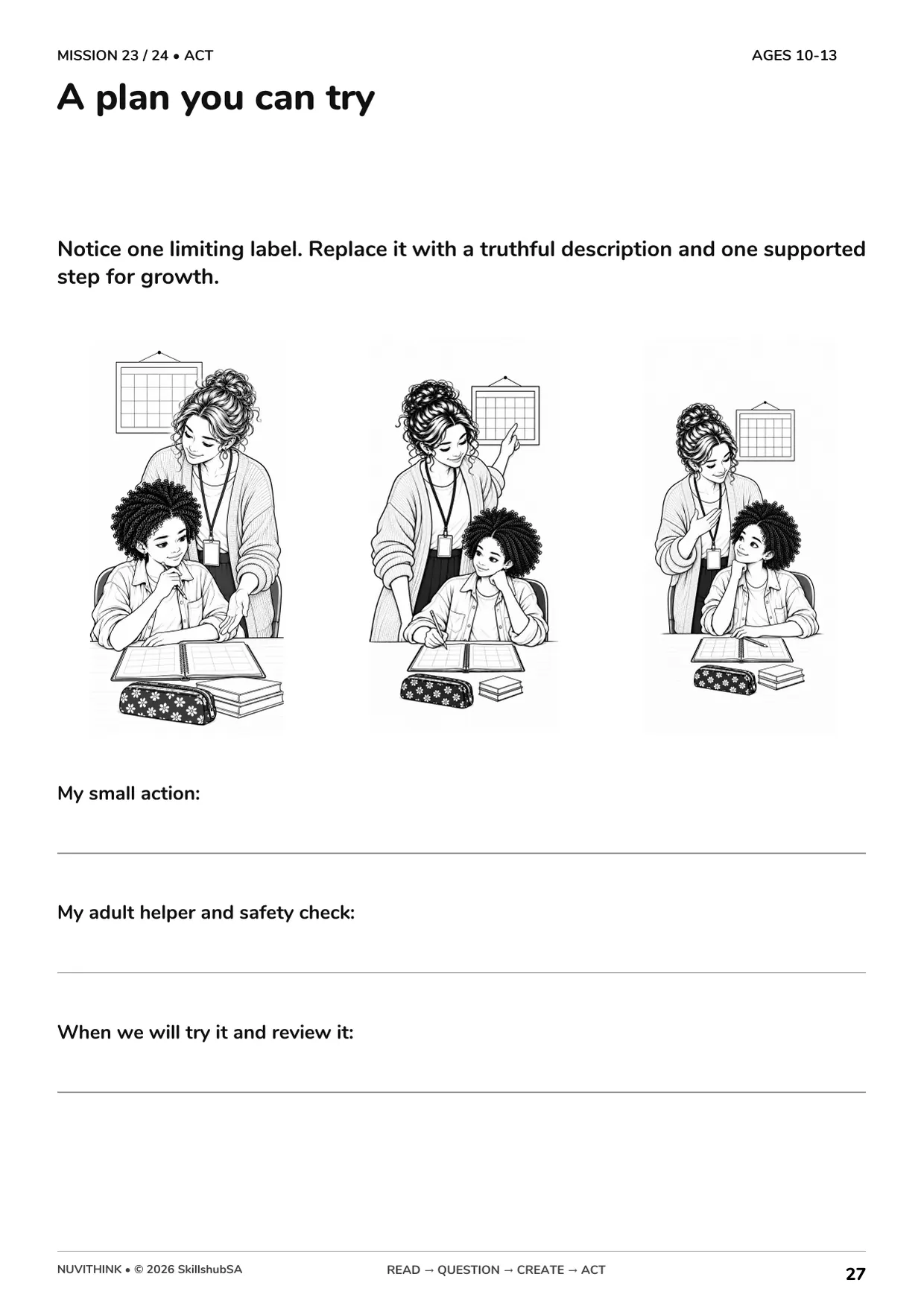
Page 27 of Who Am I Beyond the Labels?: A plan you can try
A plan you can tryPage 27 · Mission 23 · Act
Good to knowYoung people can work on their own, with a partner or in a group. A trusted adult remains important for conversation, practical steps and safety, and no activity requires a personal disclosure.
An example from Who Am I Beyond the Labels?Who Am I Beyond the Labels? reads Genesis 1:26–27 and Ephesians 2:10 together. Readers examine how both harsh and flattering labels can take over, tell describing a skill apart from ranking a person’s worth, and then plan a truthful response to a harmful label, with a trusted adult involved where support is needed.
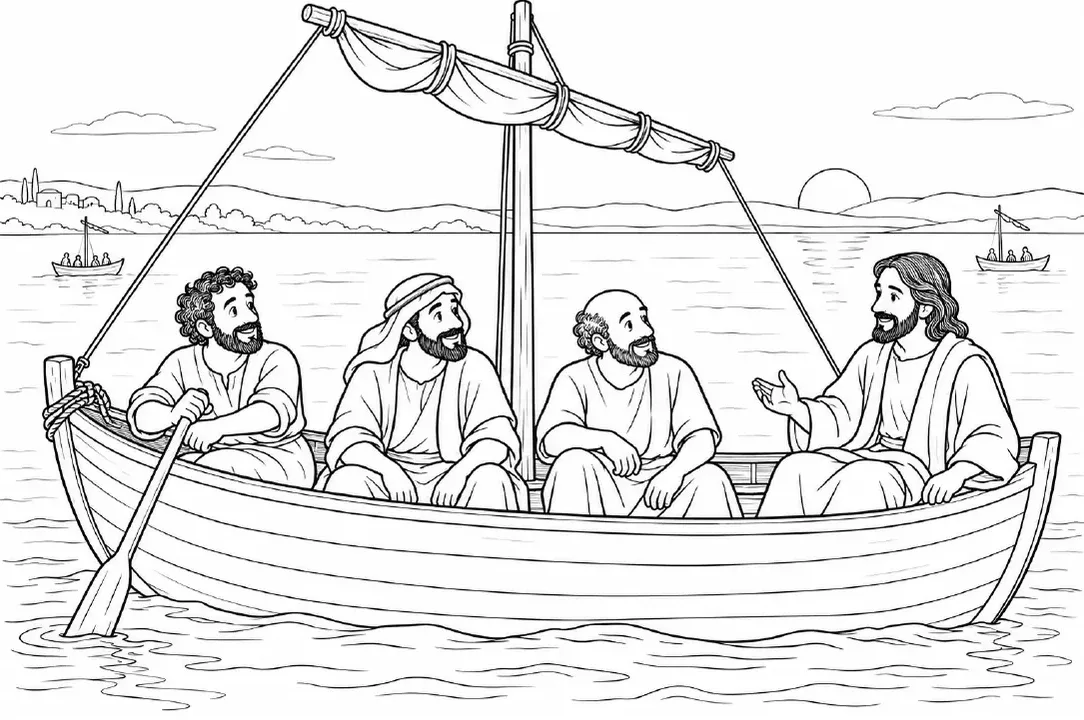
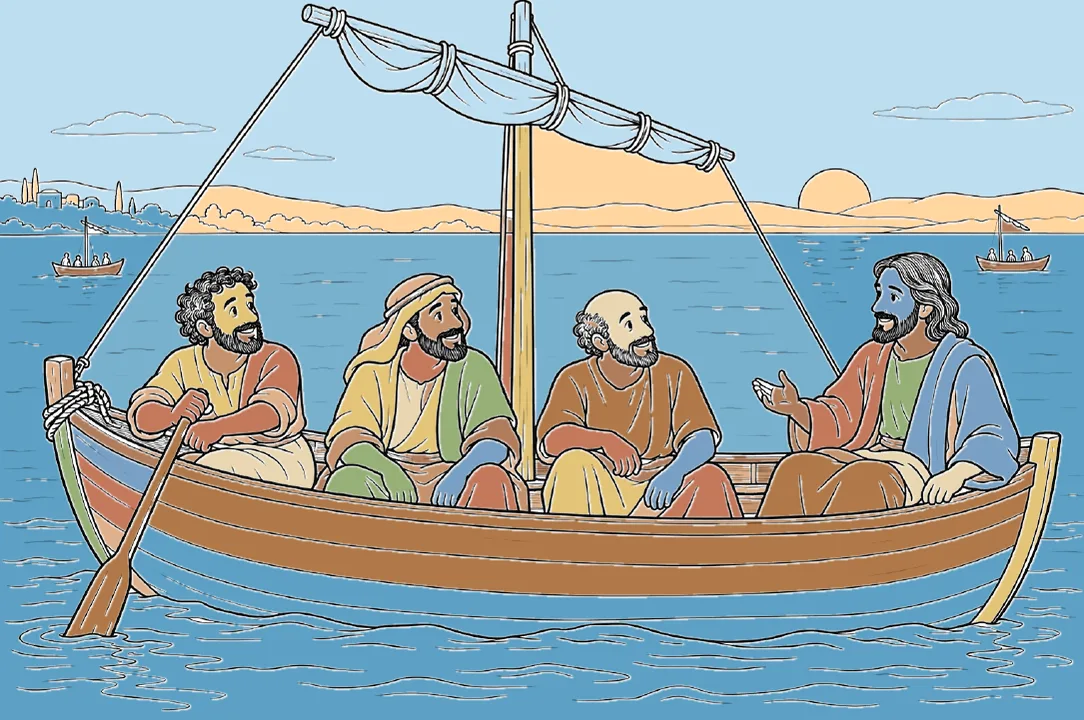
A black-and-white line drawing of Jesus and his friends in a boat, ready for a child to colour ColouredIn the book
Colour and create

Pages children make their own

Book pages are printed in black and white so children can add their own colour while they talk about the scene. Colouring gives time to stay with the story. The coloured version here shows what that step can look like.

The thinking children practise

Thinking in the service of Scripture

Every collection invites children to practise habits of thought that help them understand God’s Word and live it out: paying attention, asking for an explanation, considering consequences and checking a first answer.

1Reading for meaningChildren return to the story to support an answer and learn to tell what the text says from a plausible interpretation.
2Reasoning about consequencesChildren put events in order, connect actions with results and compare possible responses.
3Considering othersChildren think about how choices affect others, while telling an imagined feeling apart from what the account actually reports.
4Planning a responseChildren choose a manageable next step, say what they need and practise the words they might use.

These are opportunities to practise. What a child gains depends on the activity, their participation and the support around them. The books do not claim that completing missions produces a general rise in ability or a particular level of spiritual maturity.

In every book

What you will find inside

A named Bible passageEvery book is built on a Bible account or teaching, with the reference on the cover so you can read it from the Bible together.
24 missionsShort, varied activities that move from the Bible account into everyday situations children recognise.
Pages to colour and write onBlack-and-white illustrations and space to draw, write or talk through each answer.
Bible and everyday kept apartPages show clearly which parts retell the Bible account and which are made-up everyday examples.
Notes for grown-upsGuidance on the passage and on leading the conversation with care, without special preparation.
A small step of faithEach book ends with one small, safe action: prayer, kindness, honesty or service, with a trusted adult beside them.

Ready to begin?

Browse the books by age and theme, or ask us which titles suit your family, class or church.

Share with

Scroll to Top